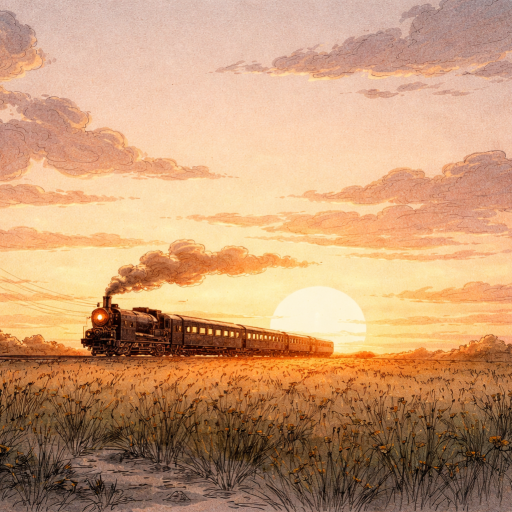
Featured

Welcome to Stories to Read…

This is the post excerpt.

There are two kinds of journeys: the ones that get you somewhere, and the ones that briefly take you somewhere else.

Stories to Read exists for the second kind.

This site will publish free, weekly short stories – humorous, slightly odd, occasionally touching – written to fit into the gaps of modern life. They are stories for waiting rooms, coffee queues, missed connections, delayed departures, and yes, trains. Especially trains.

Our first collection is Stories to Read on the Train, a series of tales carefully calibrated to the rhythm of rail travel. Short enough to finish between stations. Long enough to make you forget where you are for a moment. Designed to be read while someone nearby sighs loudly, rustles a pastry wrapper, or explains their life story into a phone on loudspeaker.

Some of these stories may cause a quiet chuckle. If so, please don’t panic. Simply pretend you’ve received an amusing text, or glance meaningfully at the window as though you’ve remembered something pleasant about your childhood.

For readers travelling between London and Brighton on the non-express service, these stories have been arranged – through no real scientific process -to fill the precise gaps between stations, assuming the reading speed of an average small adult. Your results may vary if you skim, reread sentences unnecessarily, or become distracted by tunnels.

New stories will arrive weekly. They’re free. All you need to do is subscribe, and they’ll appear in your inbox like a polite companion who knows when to stop talking.

All aboard.

The book has been delayed due to leaves on the track.

Matcha and Missiles

I once had a client who wished to remain anonymous.

Oliver Moore arrived at our session ten minutes early, already emotionally dismantled, which is never a promising sign. Early usually means hopeful. Early and dismantled suggests a man who has recently been humbled by forces he does not understand.

He sat down carefully, like his joints were no longer fully committed to the idea of holding him together.

“I think this relationship might not last,” he said.

Behind me, my life coaching certificate hung slightly crooked on the wall. It always hangs slightly crooked. I’ve chosen to believe this makes me seem approachable. Grounded. A professional, yes—but one who understands imperfection.

“Tell me about her,” I said, gently.

His entire posture changed.

“She’s incredible,” he said. “Truly. She’s thoughtful, she listens, she doesn’t pretend to like things—she just likes them. She suggested we split dessert before I had to pretend I didn’t want it. She remembers details. Small ones.”

“A rare and powerful combination,” I said.

“And the dates,” he continued, a faint smile appearing. “At first, they were perfect. Effortless. Walks, galleries, little cafés. Everything just… worked.”

I nodded. Strong foundation, I wrote, underlining it once for emphasis.

“But now,” he said, and here his expression dimmed, “every date is matcha.”

I kept my face neutral.

“At first it was charming,” he said. “Endearing, even. A signature move. ‘Let’s get matcha,’ she’d say. And I’d think—yes. This is culture. This is antioxidants. This is a man evolving.”

He paused.

“But the thing about these dates,” he said slowly, “is they start perfectly. Structurally sound. There’s chemistry. Momentum. The drinks arrive—bright green, optimistic. The future feels… stable.”

I could feel the turn coming.

“And then,” he said, leaning forward slightly, “the straw.”

He didn’t wait for a question.

“It’s always paper,” he said.

A beat.

“And I don’t understand why I’m using it.”

Interesting.

“I’m sitting there,” he continued, “on a date with a woman I genuinely like, holding what is essentially a damp cardboard flute, and I find myself thinking—why is this my burden? Why am I the one adapting? There are countries out there dropping missile after missile, entire regions in chaos—and I’m here, quietly complying with a straw that has a five-minute lifespan.”

He shook his head, genuinely baffled.

“At what point did this become my personal responsibility?”

I allowed a respectful silence. This was clearly not rhetorical.

“And the worst part,” he said, “is how it happens. Because at first, it’s fine. You think—this is manageable. I’m adaptable. I’m resilient.”

I wrote: Initial optimism.

“But then,” he said, voice tightening slightly, “you feel it. The shift.”

He raised his hand, miming the object.

“It softens. Subtly at first. You ignore it. You stay engaged. She’s talking about something—her pottery class, her friend’s birthday—and you’re nodding, you’re present… but a part of you has already left the conversation.”

He looked at me.

“You start monitoring the straw.”

I nodded slowly.

“And then,” he said, “it accelerates. The structure goes. The walls cave in. And I…”—he paused—“…I go with it.”

This felt important.

“What do you mean?” I asked.

“I mean physically,” he said. “I start to mirror it. My posture softens. My spine loses conviction. My grip weakens. I’m rotating the straw, trying to find some remaining integrity, and in the process I lose my own.”

He demonstrated, slumping slightly in the chair.

“My shoulders round. My voice gets quieter. I’m nodding more than I’m speaking. I become… absorbent.”

I wrote that down, underlining it twice.

“By the end of the drink,” he said, “the straw is gone. Not snapped, not broken—just… dissolved. And I’m sitting there, holding what used to be structure, feeling like a shell of a man who, twenty minutes earlier, had opinions.”

He looked at me, exhausted.

“And the dates are starting to feel the same.”

I let the silence sit for a moment.

“They begin strong,” he said. “There’s energy, connection, clarity. And then somewhere along the way, something gives. Not dramatically—just enough that I notice. And once I notice, I can’t un-notice it.”

He exhaled slowly.

“I start compensating. Smiling more. Nodding more. Trying to keep the thing upright, whatever it is. And by the end, I’m not sure if I’ve been on a date or just… endured a slow, polite collapse.”

Behind him, the crooked certificate watched us both, offering no guidance.

“I don’t know if it’s me,” he said. “I don’t know if it’s the routine. I don’t know if it’s the straw. But I do know this—if every date involves a controlled disintegration, I’m not sure how long I can keep showing up intact.”

There it was.

The real question, finally articulated.

We sat in silence. Outside, the world continued in all its disproportionate chaos. Inside, one man grappled with the quiet erosion of both cellulose and self.

Eventually, he straightened slightly.

“I’ve been thinking,” he said.

I felt a quiet sense of professional anticipation.

“I could suggest other places,” he said. “Break the pattern. Introduce… structural diversity.”

I nodded.

“Or,” he continued, “I could take responsibility for what I can control.”

He reached into his bag and pulled out a slim metal case. He opened it slightly, just enough for me to glimpse it.

A straw. Stainless steel. Unyielding.

“I haven’t used it yet,” he said. “It felt… premature.”

I considered this.

Behind me, my certificate remained slightly crooked, as it always is, silently reinforcing the idea that no system is ever perfectly aligned.

“That,” I said carefully, “seems like a very stable starting point.”

He nodded, closing the case.

And just like that, something held.

Because sometimes, it’s not the relationship that’s falling apart.

Sometimes, it’s just that no one thought to question the straw soon enough.